How to brush your teeth properly, step by step
Almost everyone brushes every day, yet most decay and gum inflammation come down to poor technique. The good news: the right method is not harder, just different.

What is brushing actually for?
The purpose of brushing is not fresh breath or white teeth but the regular disruption of plaque – the bacterial film that forms on teeth within hours – and delivering fluoride to the enamel. Those two things prevent decay and gum inflammation. Everything that serves them is useful; everything else is just routine.
The technique, step by step
Preparation
A soft-bristled brush – manual or electric – and a pea-sized amount of fluoride toothpaste. More paste does not clean better; it only foams and makes you spit sooner.
45 degrees to the gum line
Aim the bristle tips at the junction of tooth and gum, tilted slightly towards the gum. This is where plaque collects and where gingivitis starts.
Small motions, little force
Two or three teeth at a time, tiny circular or vibrating movements for 10–15 seconds, then move on to the next group. Press only enough for the bristles to bend slightly.
Every surface, in order
Outside, inside, chewing surfaces – start top right and work round so nothing is missed. For the inside of the front teeth hold the brush vertically and clean with the tip.
Tongue
The coating on the back third of the tongue is the main source of bad breath. A few strokes with the brush or a tongue scraper is enough.
Spit, don't rinse
Spit out the toothpaste but do not rinse with water. Fluoride left on the teeth strengthens enamel many times more effectively.
Manual or electric?
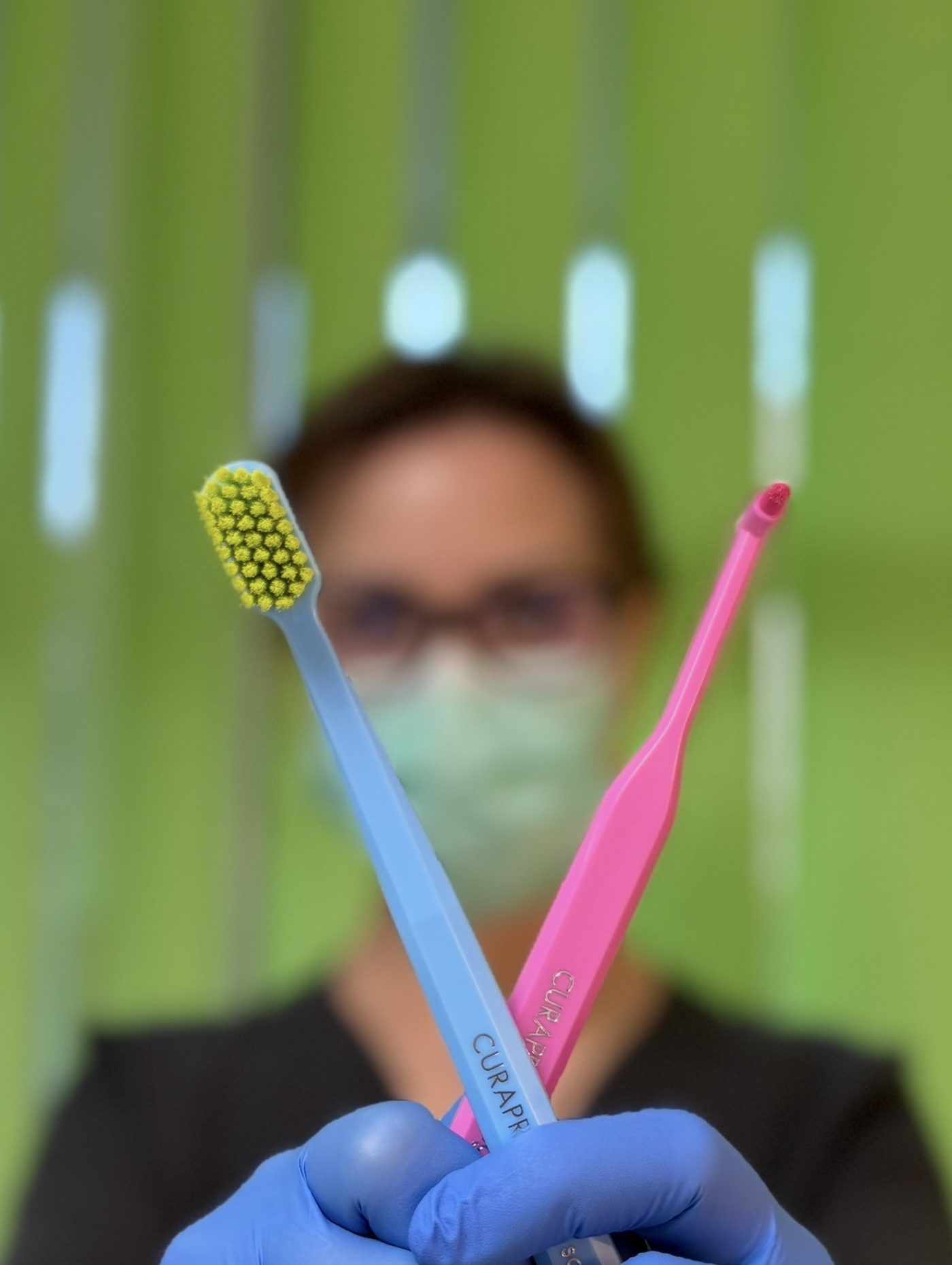
You can brush brilliantly or badly with either. The advantage of electric brushes – especially oscillating-rotating heads – is that they perform the motion for you: you only guide the head slowly from tooth to tooth along the gum line. The built-in timer and pressure sensor also catch two common mistakes. A manual brush achieves the same if the technique and the two minutes are right.
Non-negotiable in both cases: soft bristles. Medium and hard brushes do not clean better; they wear the tooth neck and push the gums back.
The most common mistakes
- Pressing too hard. Causes gum recession and wear at the tooth neck – plaque is removed by bristle movement, not force.
- Horizontal scrubbing. Misses the spaces between teeth and carves V-shaped notches into the necks.
- Too little time. One minute cleans half the surfaces.
- Rinsing after brushing. Washes the fluoride away before it can act.
- Brushing straight after acidic food or drink. Softened enamel is easiest to wear away – wait 30–60 minutes and drink water meanwhile.
- A worn brush. After three months the bristles splay and no longer reach the gum line.
The other half of brushing: between the teeth
Bristles do not reach between the teeth, yet a large share of cavities and gum inflammation starts there. Clean between the teeth once a day – ideally before the evening brush – with floss or, for wider gaps, correctly sized interdental brushes. Initial bleeding is a sign of inflammation and stops within one to two weeks of regular cleaning.
We'll show you on your own teeth
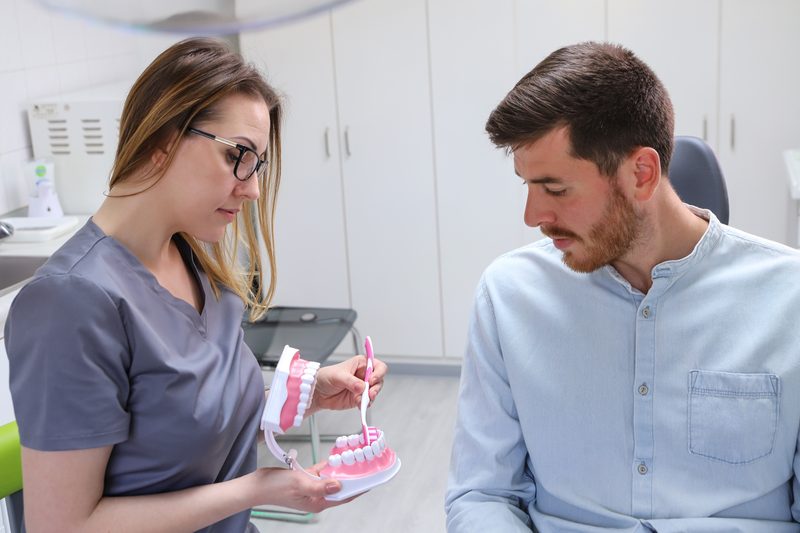
iTOP coaching is not theory: we practise the technique in your own mouth with your own tools, check where plaque remains and size your interdental brushes. One session – a routine for life.
When to brush?
Morning and evening – the evening brush matters most, because less saliva is produced during sleep and plaque left on the teeth works undisturbed. In the morning brush before breakfast or at least half an hour after it, especially if you have fruit, juice or coffee. After meals, water or sugar-free gum is the quickest help.
When should you see a dentist?
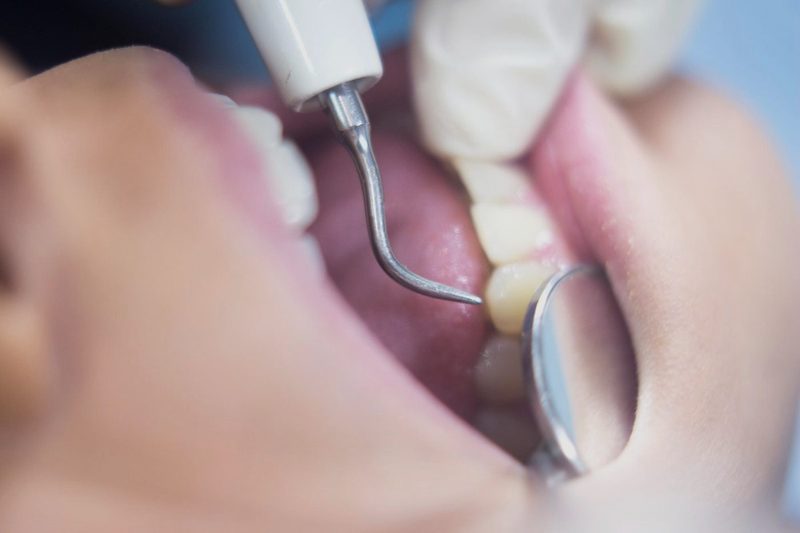
- Gums still bleed after two weeks of correct technique – tartar is the likely cause and can only be removed in the clinic.
- Sensitive tooth necks, visibly worn or receded areas.
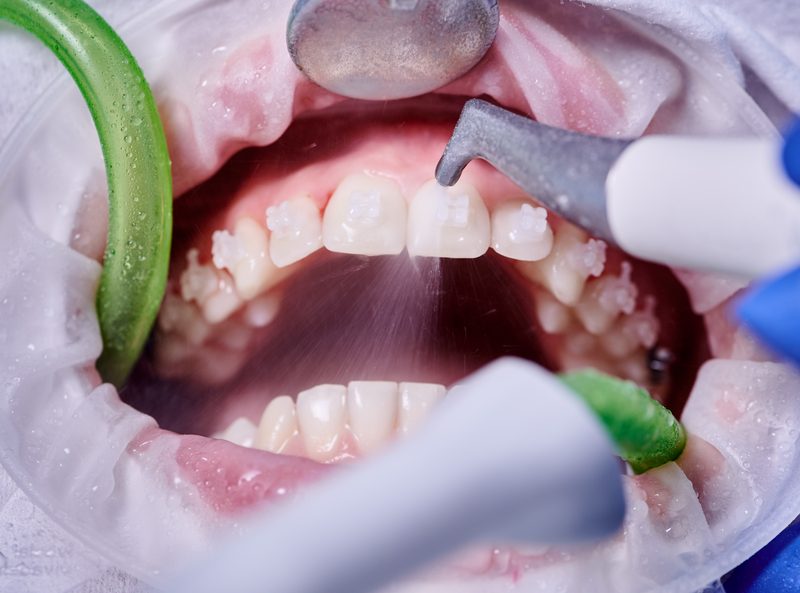
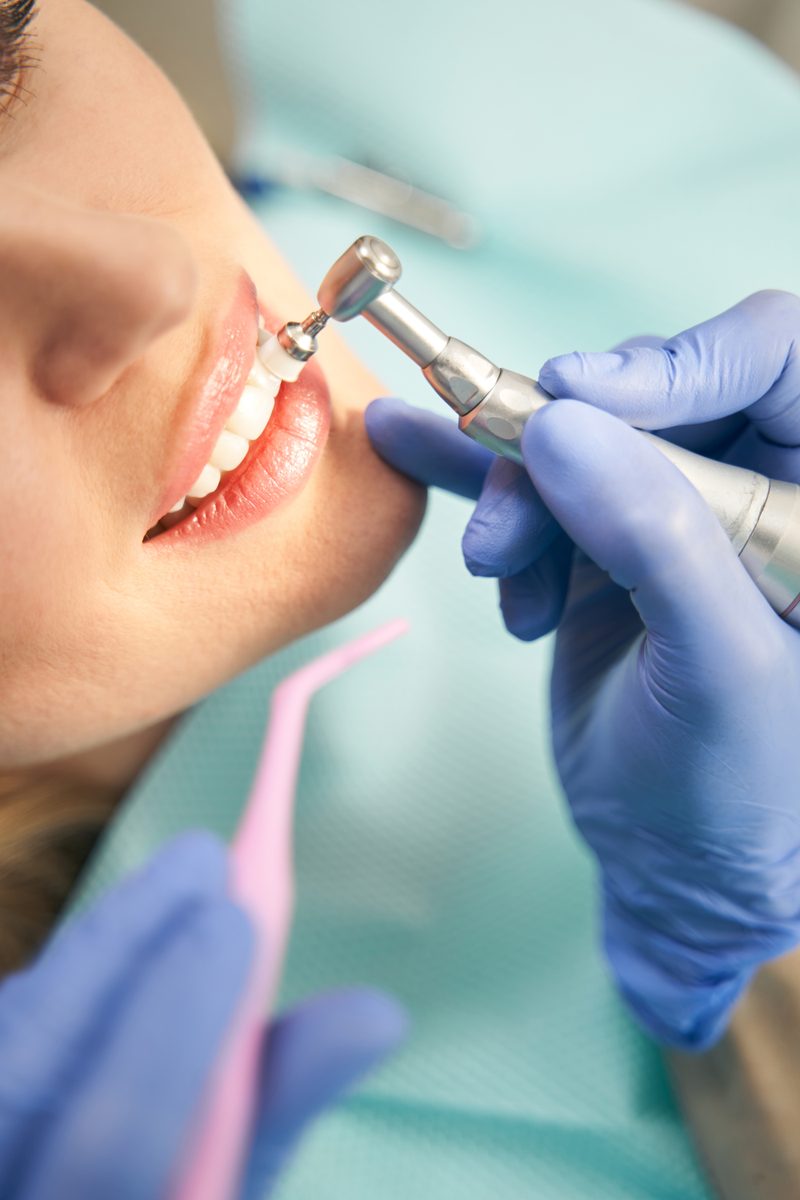
- Stains that brushing does not remove – air polishing is the answer.
- You are simply not sure you are doing it right – we can tell in ten minutes at a check-up.
In summary
Two minutes, 45 degrees, a soft brush, small motions, fluoride without rinsing and daily interdental cleaning – that is the whole recipe. No more work than you do now, just better aimed. You will notice the difference first when the bleeding after brushing stops, and later at your check-ups.
Frequently asked questions
1Floss first or brush first?
Preferably floss first: the plaque loosened from between the teeth is then removed by brushing, and fluoride reaches the clean interdental spaces. But the order is secondary – what counts is that both happen every day.
2How much toothpaste?
A pea-sized amount for adults. The brush-length ribbon seen in adverts only foams and makes you spit the paste out before the fluoride can act.
3What is different for children?
Up to age six a parent should brush or finish brushing; use a rice-grain smear of paste up to age three and a pea after that, with age-appropriate fluoride content. The technique is the same: soft brush, small motions, two minutes.
This article is general information and does not replace a dental examination or personal advice.