Gum disease: what it is, why it matters and how to prevent it
Gingivitis is reversible. Once inflammation spreads to the bone that holds the tooth it becomes gum disease – permanent damage, but a process that can be halted, and ideally never started.

From gingivitis to periodontitis
A tooth is not 'glued' into the bone; it is held by the gum, the fibres of the periodontal ligament and the jawbone together. The first stage of the disease is gingivitis: plaque along the gum line makes the gum red, swollen and prone to bleeding. This stage is still fully reversible.
If plaque and the tartar it hardens into stay for longer, the inflammation moves deeper. The gum detaches from the tooth, forming a pocket where bacteria multiply undisturbed, and the body's inflammatory response gradually breaks down the fibres and bone that anchor the tooth. This is periodontitis. Lost bone does not rebuild itself, so the goal here is to halt the process.
Why is this more than a dental problem?
Periodontitis is the most common cause of adult tooth loss, but its effect does not stop at the mouth. The chronic inflammation in the pockets burdens the whole body: research links untreated periodontitis with cardiovascular disease, poorer diabetes control and pregnancy complications. That is why we examine the gums at every check-up and why focal infection screening is part of our assessment.
Symptoms you should not ignore
- Gums that bleed when brushing – or spontaneously, for instance in the morning.
- Receding gums, 'lengthened' teeth, sensitive tooth necks.
- Persistent bad breath or an unpleasant taste.
- Pus between gum and tooth.
- Loose or shifting teeth; a changed bite, new gaps between teeth.
- A denture or bridge that no longer fits.
Risk factors
Plaque is always required for the disease to develop, but several factors accelerate it markedly:
- Smoking – the strongest modifiable risk factor; it also impairs healing.
- Diabetes, particularly with poorly controlled blood sugar.
- Inherited susceptibility – if early tooth loss runs in your family, stay alert.
- Stress, lack of sleep, a weakened immune system.
- Clenching and grinding – bone loss is faster around overloaded teeth.
- Poorly fitting fillings and crowns that retain plaque.
How to prevent it
Brush twice a day, aimed at the gum line
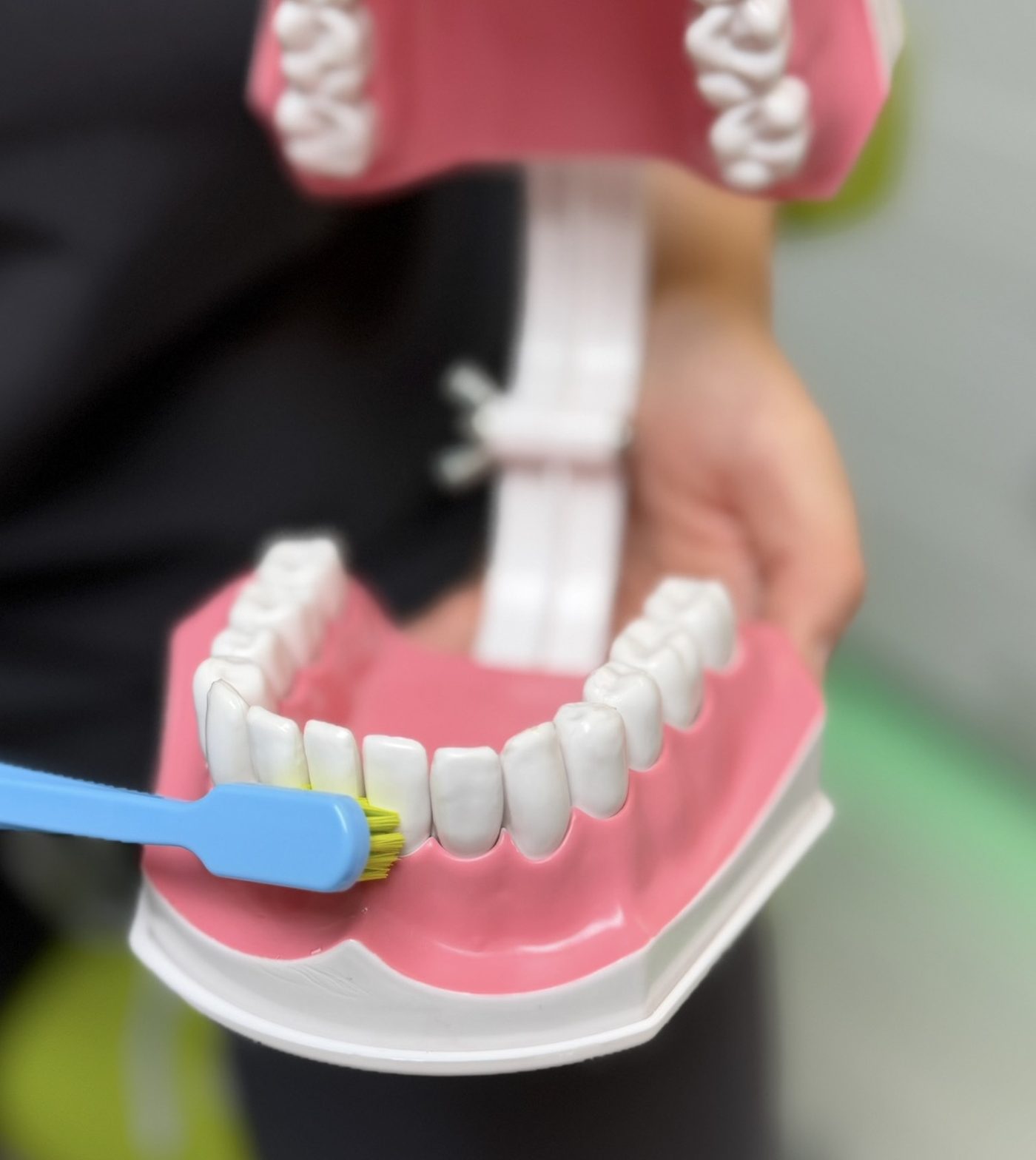
Soft brush, fluoride toothpaste, two minutes. Tilting the brush 45 degrees towards the gum margin disrupts plaque exactly where inflammation would start.
Clean between the teeth every evening
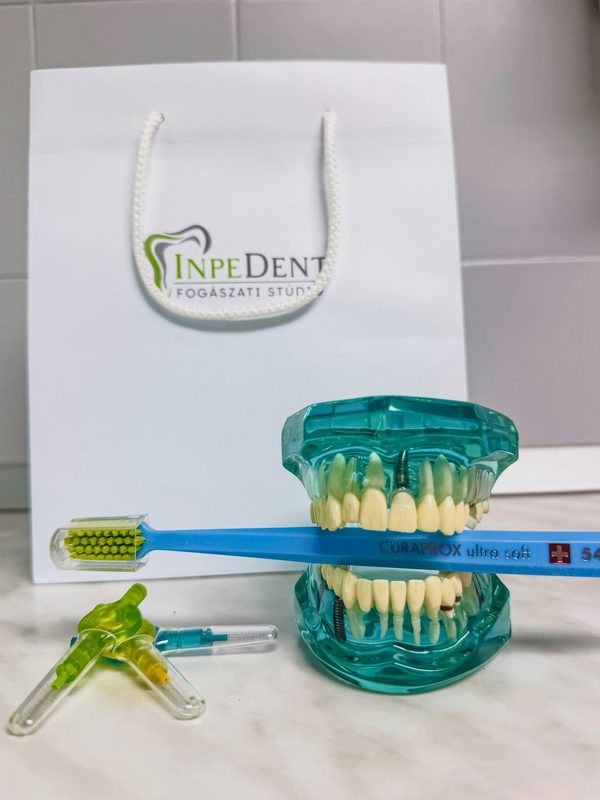
Gum disease begins between the teeth. Floss, or correctly sized interdental brushes for wider gaps – without skipping.
Professional scaling every 6–12 months
The rough surface of tartar is a permanent bacterial colony. It cannot be removed at home, so regular in-clinic cleaning is the backbone of prevention.
Stop smoking, control blood sugar
Managing the two biggest risk factors is worth more than any mouthwash.
Regular periodontal screening
At the check-up we measure the depth of the pockets between gum and tooth – bone loss shows up years before a tooth would start to move.
Pockets already formed? There is a solution.
Closed periodontal curettage removes deposits from the root surface as well, so the gum can reattach. A painless procedure under local anaesthetic – and the first step in halting the disease.
How do we treat gum disease?
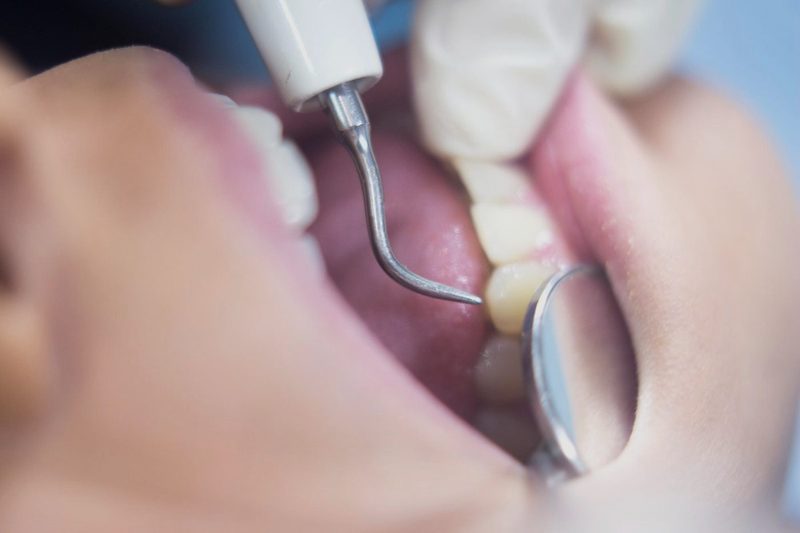
Treatment always begins with removing the deposits. For superficial inflammation professional scaling is enough; where pockets have formed we clean the root surfaces below the gum line with closed curettage. The gum then reattaches over a few weeks and the pockets become shallower.
The key to lasting success is maintenance: for periodontal patients professional cleaning is due every 3–4 months instead of once a year, because that is how quickly bacteria recolonise the pockets. It is the life insurance for your own teeth.
When should you see a dentist?
Immediately if you notice a loose tooth, pus or sudden gum swelling. Within two weeks if bleeding on brushing does not stop despite careful cleaning, if the gums recede or bad breath persists. And in any case once a year – gum disease is loudest when it is silent.
In summary
Gum disease is slow, quiet and largely preventable. Thorough home cleaning that includes the spaces between the teeth, regular professional scaling and control of the major risk factors – smoking and blood sugar – are enough in most cases. And if it has already begun, early treatment stops it: keeping your own teeth remains a realistic goal even then.
Frequently asked questions
1Does closed curettage hurt?
No. The treatment is carried out under local anaesthetic, so the procedure itself is painless. Tooth necks may be a little sensitive for one or two days afterwards; this passes quickly.
2Does the bone grow back after treatment?
Lost bone generally does not rebuild on its own, but once the inflammation resolves further bone loss stops and the gum reattaches. In selected cases regenerative surgery can restore bone – the examination decides.
3Is gum disease hereditary?
The susceptibility is: the strength of the body's inflammatory response is partly genetic. The disease itself, however, cannot develop without plaque – so it is preventable even with an inherited tendency; it simply demands more consistent home cleaning and more frequent check-ups.
This article is general information and does not replace a dental examination or personal advice.