Healthy gums: how to spot gingivitis early – and prevent it
Gums are healthy when you never notice them. If they bleed when you brush, or look red or puffy, they are already inflamed – the good news is that at this stage it is fully reversible.

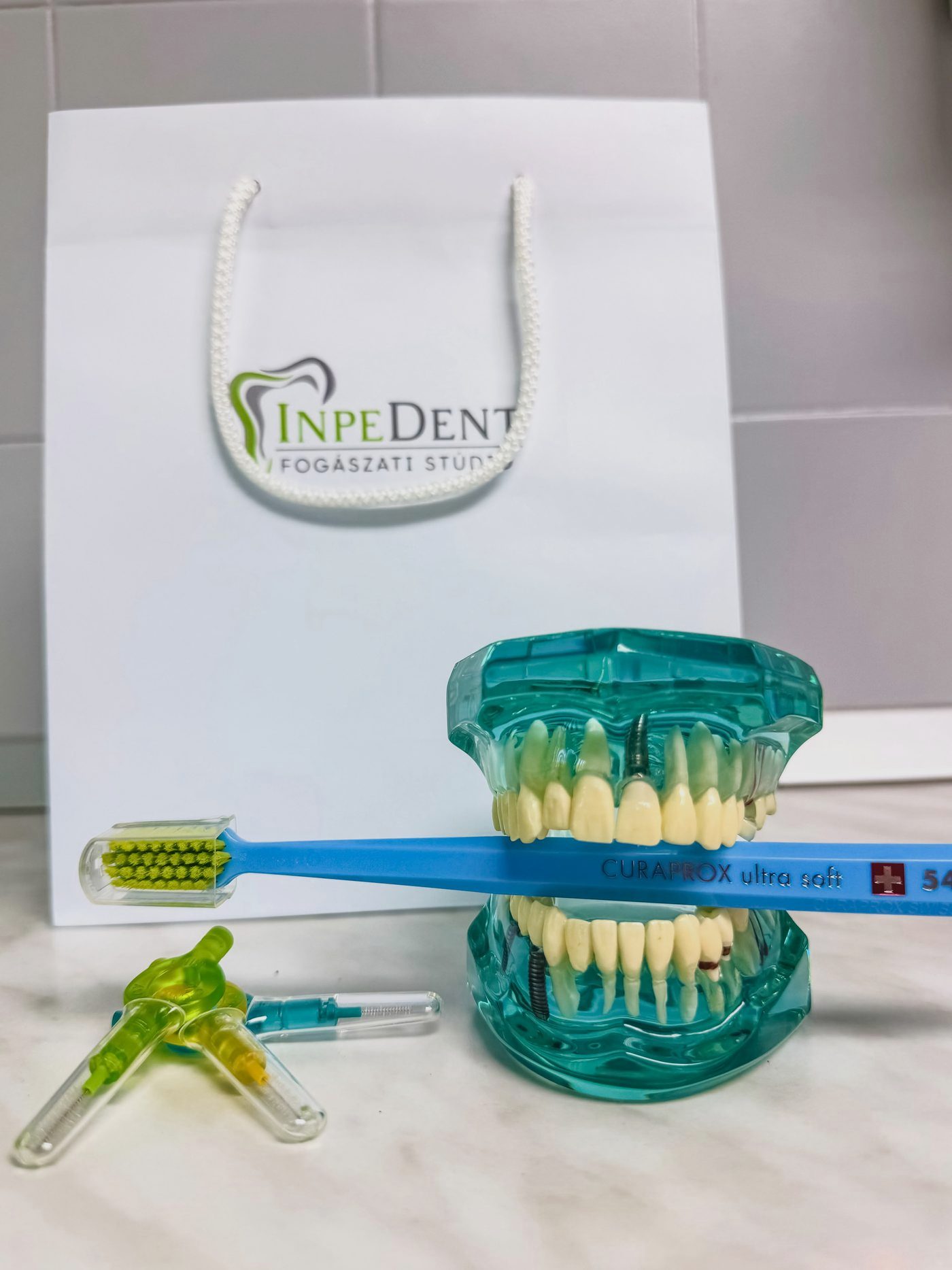
What do healthy gums look like?
Healthy gums are pale pink, hug the teeth firmly, form neat little 'triangles' between the teeth and do not bleed – not when brushing, not when flossing, not when eating. They do not hurt, they are not swollen and they do not pull away from the neck of the tooth.
If that description does not match your gums, you are not alone: gingivitis is the most common dental problem among adults. It spreads unnoticed precisely because it rarely hurts.
The first signs of gum inflammation
- Bleeding when brushing, flossing or biting into hard food.
- Redness – the gum margin is bright red or purplish instead of pale pink.
- Swelling: a shiny, puffy gum edge that no longer sits flush against the tooth.
- Bad breath or an unpleasant taste that returns after brushing.
- Sensitivity at the neck of the tooth – receding gums expose the root surface.
Why does it develop?
The cause is almost always the same: plaque sitting along the gum line and between the teeth. Bacterial by-products irritate the gum and the body responds with inflammation – hence the redness, swelling and bleeding. Plaque that is not removed regularly hardens into tartar within days. Its rough surface traps even more plaque, and it can no longer be brushed off at home.
Left untreated, the inflammation can spread deeper, to the fibres and bone that anchor the tooth. That is periodontitis, which can lead to tooth loss – we cover it in a separate article: Gum disease: what it is and how to prevent it.
A daily routine that protects the gums too
Soft brush, aimed at the gum line
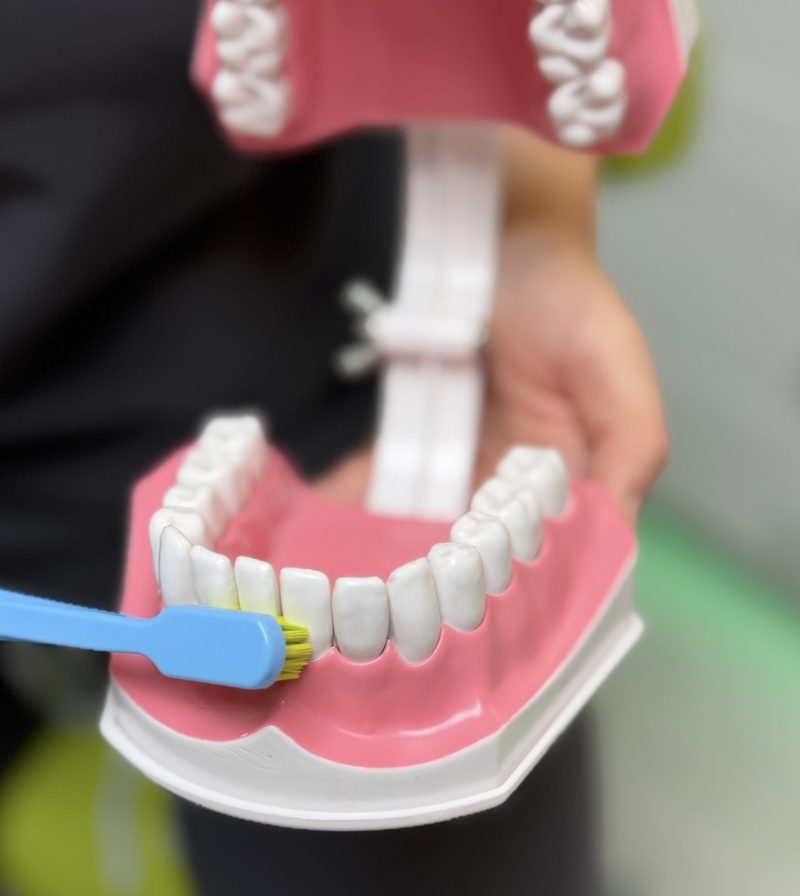
Tilt the brush 45 degrees towards the gum margin so the bristles clean where tooth meets gum. Small vibrating motions – no force needed, but time is: two minutes.
Clean between the teeth every day
Floss or correctly sized interdental brushes, ideally in the evening. This is where plaque the brush never reaches sits, and where most gum inflammation starts.
Gentle flossing technique
Wrap the floss in a C-shape around the tooth and slide it gently just below the gum line – never snap it into the gum.
Clean your tongue
The coating at the back of the tongue is a bacterial reservoir and the main source of bad breath. A tongue scraper or a few strokes of the brush is enough.
New brush every 3 months
Splayed bristles miss the gum line and can injure the gums.
The right tools
- A soft or ultra-soft toothbrush. Medium and hard brushes wear the tooth neck and cause recession – they do not clean better.
- Fluoride toothpaste. Gum-care ingredients can help, but fluoride is the essential.
- Interdental brushes in several sizes. Most mouths need two or three different sizes.
- Alcohol-free mouthwash as an add-on – alcohol dries the mucosa.
Learn it, tailored to your own mouth
At an iTOP oral hygiene session you do not get generic advice: we practise the technique on your own teeth with your own tools and size your interdental brushes. One appointment that pays off for years.
Risk factors to watch
- Smoking. It constricts the gum's blood vessels, so bleeding – the most important warning sign – may be absent while damage progresses.
- Diabetes. High blood sugar impairs healing and increases inflammation; unresolved gingivitis in turn worsens blood sugar control.
- Hormonal changes – pregnancy, puberty, menopause – make gums more reactive.
- Medicines that cause dry mouth (blood pressure drugs, antidepressants, antihistamines).
- Chronic stress and poor sleep weaken the immune response.
When should you see a dentist?
- Gums still bleed, or look red or swollen, after two weeks of careful cleaning.
- Gums have receded, teeth look 'longer', tooth necks are sensitive.
- A tooth feels loose, or the way your teeth meet has changed.
- Pus, a persistent bad taste or pain in the gums.
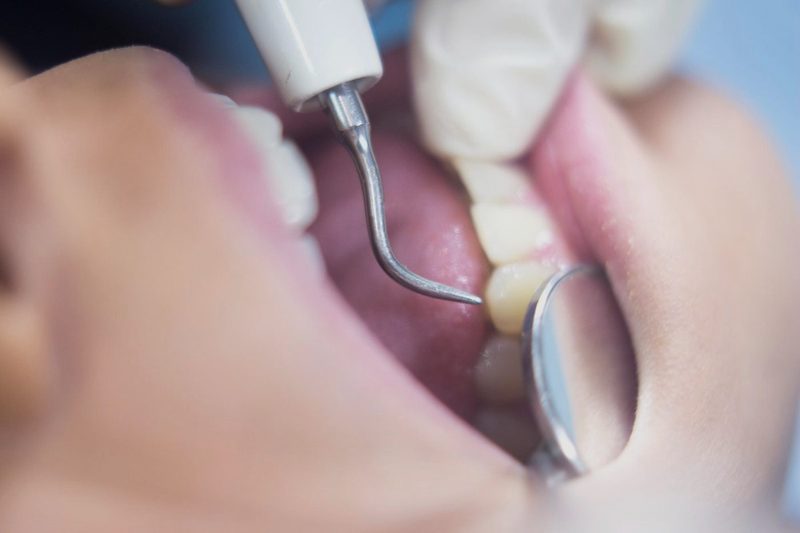
Treatment then starts with removing the deposits – professional scaling, or closed curettage for deeper inflammation – after which the gums regenerate within a few weeks.
In summary
Healthy gums need no miracle product: gentle brushing twice a day aimed at the gum line, interdental cleaning every evening and regular professional cleaning. Bleeding is not a signal to back off but to clean regularly and gently – and, if it lasts beyond two weeks, to book a dental check.
Frequently asked questions
1My gums bleed when I floss – should I stop?
No. Bleeding is a sign of inflammation that is already there; the floss does not cause it. With gentle, regular use it stops within one to two weeks. If not, tartar may be the cause and needs removing.
2Is gingivitis reversible?
Yes. As long as it affects only the gum and not the bone, gingivitis is fully curable with thorough home cleaning and professional scaling. That is why catching it early matters.
3Is bleeding gums normal in pregnancy?
It is common, because hormonal changes make the gums more reactive, but not 'normal' in the sense of something to accept. Scaling is safe during pregnancy and regular check-ups are strongly recommended.
This article is general information and does not replace a dental examination or personal advice.