Tooth decay: how it develops, how to prevent it, and when it needs treatment
Tooth decay is one of the most common dental problems, yet many myths persist about how it develops and when it needs treatment. It does not appear overnight: in the early stage it can still be stopped, but once the surface becomes cavitated, dental treatment is usually needed.

What is tooth decay, and how does it develop?
Tooth decay is a dynamic process in which the balance between mineral loss from the tooth and mineral being rebuilt is disturbed.
A biofilm that also contains bacteria – dental plaque – forms continuously on the teeth. Certain bacteria break down fermentable carbohydrates from food, producing acids. These temporarily lower the pH of the biofilm, and minerals can then dissolve out of the hard tissues of the tooth. This is called demineralisation.
The body also has a natural defence. Saliva helps to neutralise the acidic environment and can contribute to rebuilding lost minerals. This is remineralisation.
The mouth is therefore in a continuous balance between demineralisation and remineralisation. If mineral loss predominates over a longer period, the structure of the tooth is gradually damaged and a carious lesion can form.
That is why decay is not simply 'a hole in the tooth'. A visible cavity is already the result of a process that has been going on for some time.
Where does decay develop most often?
Decay forms more readily in places where the bacterial biofilm can cling for a long time and that are harder to keep clean. These can include:
- the deep grooves of molars,
- the surfaces between the teeth,
- the area along the gum line,
- exposed root surfaces,
- crowding that is hard to clean,
- and in some cases the margins of existing restorations.
The spaces between the teeth matter especially, because the bristles of a conventional toothbrush often cannot clean those surfaces properly.
What can we do to prevent decay?
One of the most important parts of prevention is consistent, appropriate care at home.
Brushing well
Teeth should be cleaned thoroughly at least twice a day. How often you brush is not the only thing that counts. Technique and the choice of brush are at least as important.
Scrubbing harder does not mean a more thorough clean. It matters much more that every surface is reached regularly and with the right technique.
Both a manual and an electric brush can maintain good oral hygiene if they are used correctly. The ideal brush and technique can differ from person to person, so it is worth choosing them with a dentist or dental hygienist.
Cleaning between the teeth
Brushing alone is not always enough, because a toothbrush cannot reach the full surface of every interdental space. Cleaning between the teeth is therefore also an important part of daily care.
Several tools are available, including floss, interdental brushes and specialised interdental devices. The same tool is not right for everyone: the size of the spaces, the position of the teeth, the condition of the gums, and existing restorations or orthodontic appliances can all influence which tool works best.
What signs can decay have?
In its early stage, decay often causes no symptoms at all. That is one reason a regular dental check-up matters even when there is no pain or other noticeable symptom.
As the process advances, you may notice:
- sensitivity to cold or sweets,
- food catching in a particular place,
- a change in the tooth surface,
- a visible cavity,
- and at a later stage spontaneous or lingering pain.
The colour of the tooth on its own is not a reliable way to judge decay.
Unsure about a spot or some sensitivity?
Ideally decay is found before it hurts. At an assessment we decide the next step from the clinical examination – and from an X-ray if it is indicated.
How is decay recognised?
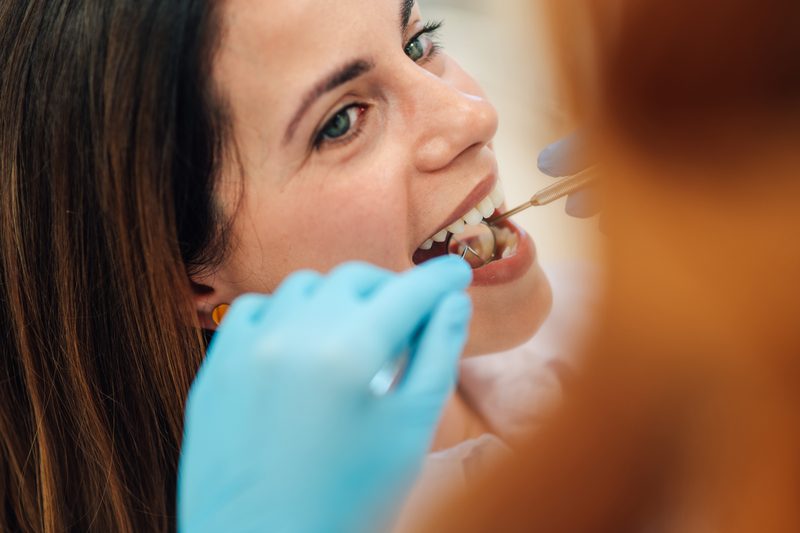
Decay is recognised primarily through a thorough dental examination.
The dentist examines the teeth under good lighting, on cleaned and, if needed, dried surfaces. They assess not only whether a change is visible, but also its location, surface, extent and activity.
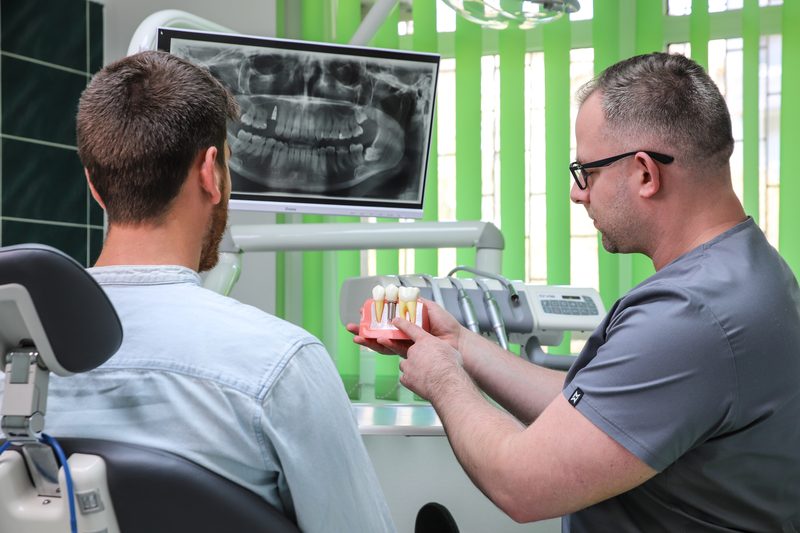
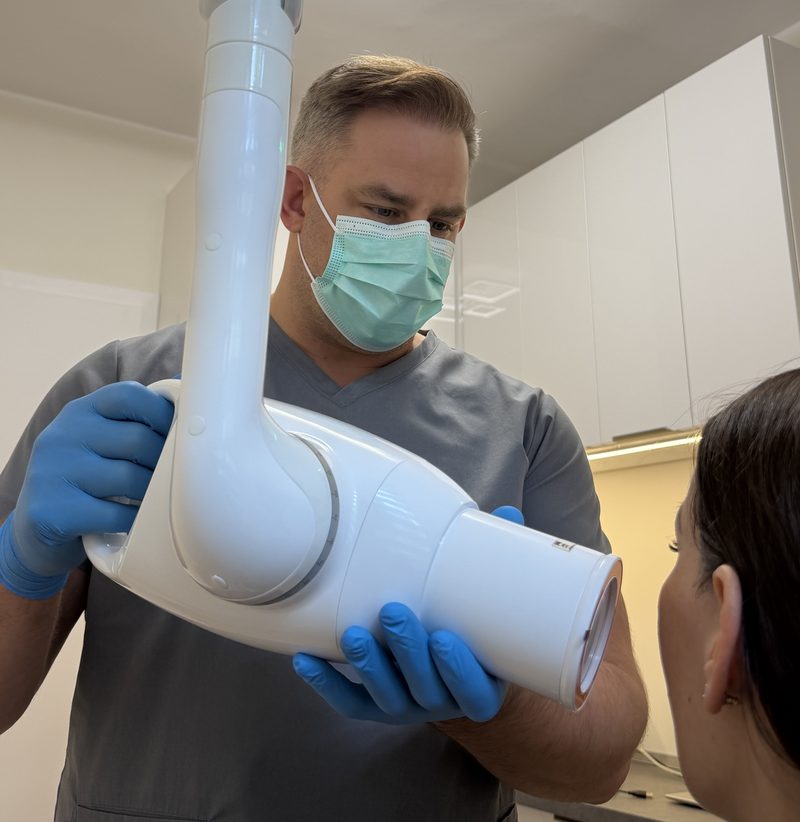
Some areas – especially the surfaces between the teeth – are harder to examine directly. In those cases an X-ray can support the diagnosis if it is needed.
An X-ray does not, however, give a diagnosis on its own. What is seen must always be interpreted together with the clinical examination and the individual circumstances of the patient.
What happens if decay is found?
An early lesion that is not yet a cavity
With early, non-cavitated carious lesions, it is possible under certain conditions to stop the process. Good home hygiene and regular review of the lesion are especially important then.
The aim at this stage is to change the conditions that keep the carious process going and to support remineralisation of the surface.
Cavitated decay
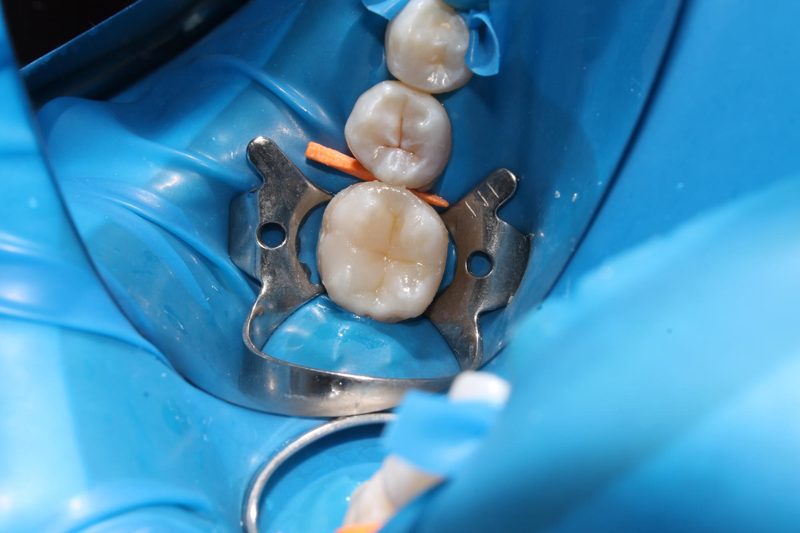
Once the surface has lost its continuity and a true cavity has formed, the area can often no longer be kept clean enough at home. Restorative treatment, for example an aesthetic filling, is then usually needed.
The aim is to keep as much healthy tooth substance as possible and to restore a surface that can be cleaned well and that works properly.
Deep decay
If the decay extends deep into the dentine and approaches the pulp, treatment can be more complex. The depth of the decay, the state of the pulp and the patient's symptoms all influence the approach.
If the process already involves the pulp and irreversible inflammation or necrosis develops there, root canal treatment may become necessary. That is why it matters to recognise decay before it causes symptoms, wherever possible.
Decay in childhood
Milk teeth can decay just as permanent teeth can, so prevention already has an important role from the appearance of the first teeth.
A parent should brush or check the child's brushing according to their age. Fluoride toothpaste is recommended from the eruption of the first teeth, in an age-appropriate amount.
The deep grooves of molars can mean a higher risk in some children. In those cases the dentist may suggest a fissure sealant, which can help prevent decay in grooves that are hard to clean. Preventive treatment should always be matched to the child's age, dentition and individual decay risk.
When should you see a dentist?
It is not worth waiting until a tooth starts to hurt. Early decay is often symptom-free, so regular check-ups make it possible to recognise lesions at an early stage.
It is definitely worth asking for an examination if:
- a tooth becomes sensitive,
- you feel pain,
- food regularly catches between two teeth or in one place,
- you notice a change or a cavity on the surface,
- you notice a change around an earlier filling,
- or it has been a long time since the last dental check-up.
The earlier the problem is recognised, the greater the chance it can be treated with a smaller intervention and with more of your own tooth substance kept.
In summary
Tooth decay is a process that develops gradually, and its early stage can remain unnoticed for a long time.
Prevention is based on consistent home care: thorough brushing with an appropriate brush and fluoride toothpaste, and regular cleaning between the teeth with a suitable tool.
Once a carious lesion has formed, treatment is not the same in every case. Early, non-cavitated lesions can in some cases be stopped, while more advanced, cavitated decay may need restorative care.
Regular check-ups matter because, ideally, decay is found well before it causes pain – not when it already hurts.
Frequently asked questions
1Does every dark spot on a tooth mean decay?
No. Grooves and surfaces can stain for different reasons. Colour alone is not enough to decide whether there is active decay. That needs a dental examination.
2If my tooth does not hurt, does that mean there is no decay?
No. Decay can be symptom-free in its early stage and even at a more advanced stage. The absence of pain therefore does not rule decay out.
3Does every decayed tooth have to be drilled?
No. Early, non-cavitated lesions can in some cases be stopped with preventive care and regular review. Once a cavity has formed on the surface, restorative treatment is needed.
4Is brushing twice a day enough?
Thorough brushing twice a day is very important, but in many cases it is not enough on its own. A toothbrush cannot clean some interdental areas properly, so regular use of a suitable interdental tool also matters.
5Should I use floss or an interdental brush?
It depends mainly on the size of the spaces and the individual anatomy. Floss can be suitable at tight contacts; in larger spaces an interdental brush often cleans more effectively. A dental hygienist can help you choose the tool and size.
6When is an X-ray needed?
Not every examination needs an X-ray. The dentist decides whether additional radiographs are indicated on the basis of individual risk, the clinical examination and how well the area can be examined.
7Why does a regular check-up matter if I have no symptoms?
Precisely because the early stage of decay often causes no pain or other noticeable symptom. Regular examination makes it possible to recognise lesions earlier and, if needed, to treat them in a less invasive way.
This article is general information and does not replace a dental examination or personal advice.